


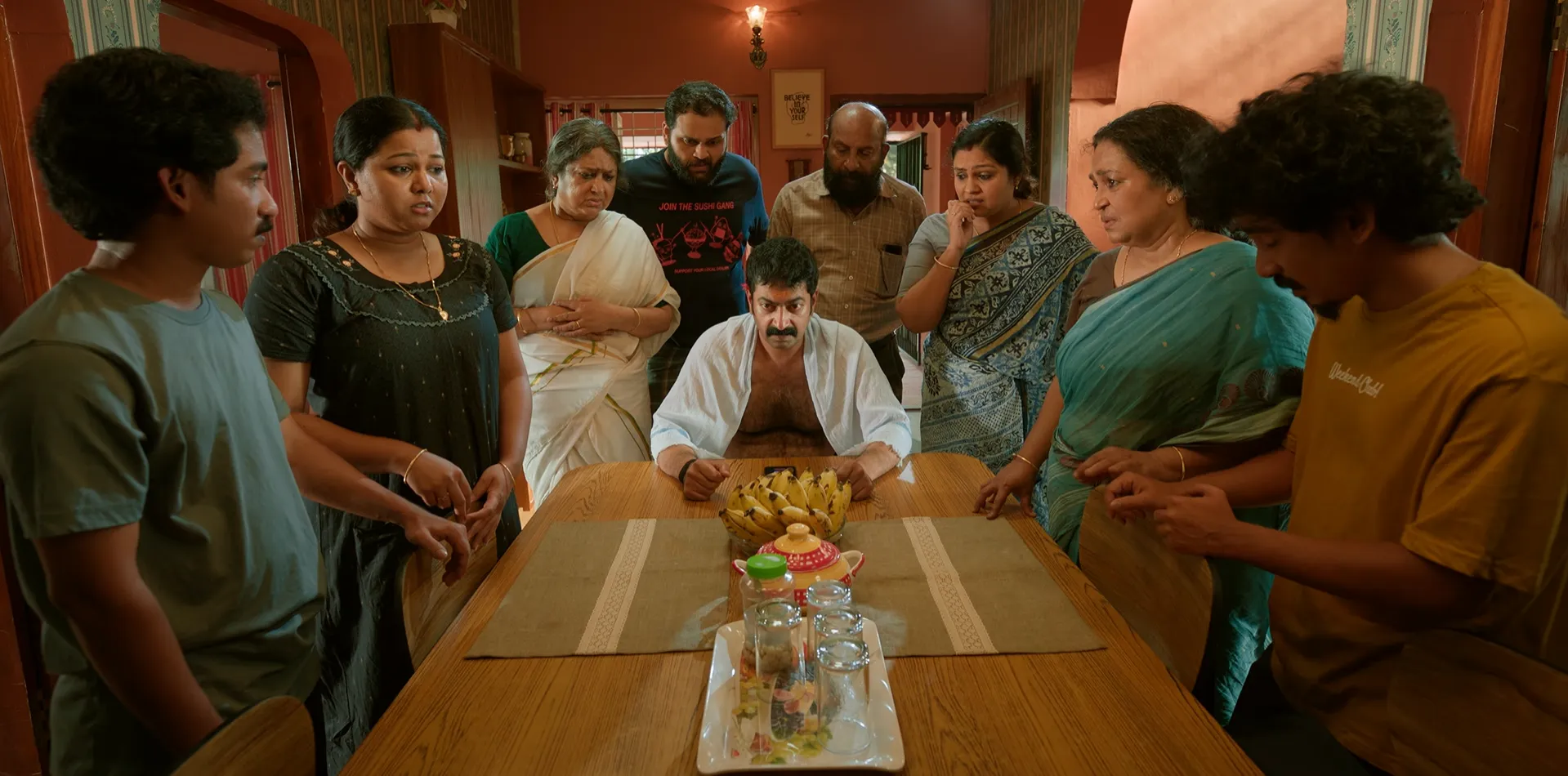
Sequels in Malayalam often are caught between maintaining the charm of the original movie and offering something new. With Mohiniyattam, sequel to the 2024 Bharathanatyam, director Krishnadas Murali not only embraces that challenge, but also turns it into an opportunity to reinvent the tone, scale, and storytelling.
What we get this time around is a dark comedy that feels both familiar and refreshing, building on the world of the original film while also carving its own identity.
Like its predecessor, Mohiniyattam is once again set around Sasidharan & his family and picks up the threads of a seemingly ordinary household trying to maintain its dignity amidst increasingly bizarre situations. But this time, the stakes are higher, the situations are more absurd, and the humour leans more towards dark humour. What begins as a traditional sequel gradually becomes something chaotic and self-aware, blending elements of family drama while taking on morality and consequence, while pushing the characters into morally grey and often ridiculous situations.
Saiju Kurup is at the heart of the film. He delivers a performance that maintains the madness with incredible control. He swings between desperation, composure, and comedic panic effortlessly, making it seem as if the role was tailor-made for him. Marking a milestone in his career (150th film!), he explores both subtle humour and exaggerated reactions without losing credibility.
But Saiju Kurup alone cannot be credited for the film’s tonal complexity. He is supported by a cast just as crucial. The returning cast members add a layer of familiarity, while the newly joined cast members introduce a sense of unpredictability, ensuring that the narrative never settles into comfort. Every single cast member, new and returning, contributes to the film’s ensemble-driven energy.
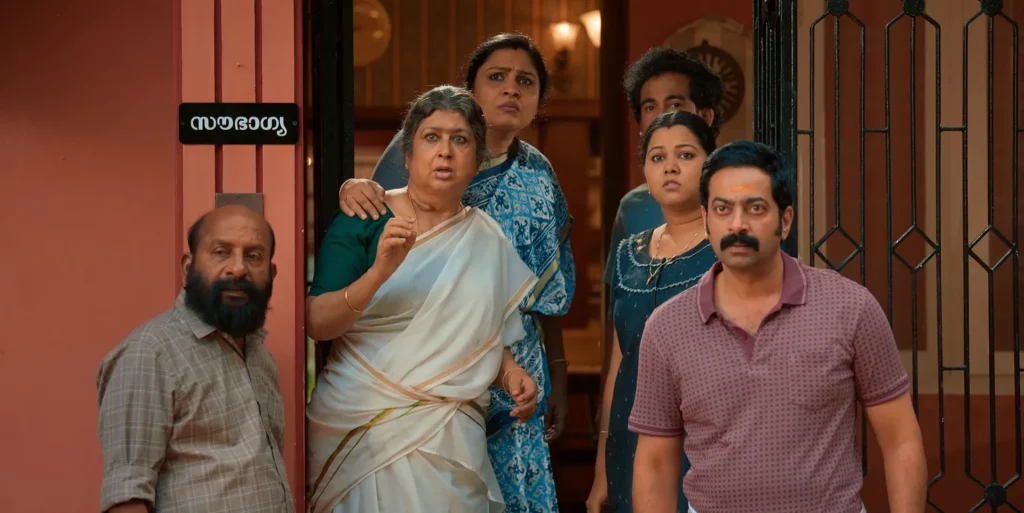
What truly sets Mohiniyattam apart is its writing. The screenplay, co-written by Krishnadas Murali and Vishnu Pradeep, thrives on situational humour rather than regular punchlines. The storytelling has this old-school favour that most filmmakers have long abandoned, yet it feels updated for a contemporary audience. The humour is often understated, sometimes just plain absurd, but very effective nonetheless.
Interestingly, the film has a structure that loosely echoes the tension-building formula seen in investigative dramas, but only to then subvert it with comedic absurdity. The constant and intentional interplay between tension and humour gives Mohiniyattam a unique rhythm. It doesn’t aim for constant laughs. Instead, it lets the humour emerge naturally from situations, often catching audiences unaware and off guard.
One of the film’s most notable achievements, however, is its consistency in tone. It ventures into exaggerated and sometimes illogical territory, and despite that, it manages to maintain a chaotic tone that helps keep the audience invested. The humour never becomes too loud or too overwhelming. Instead, it remains rooted in subtlety, making the film accessible to most audiences who watch expecting a laugh.
That being said, Mohiniyattam may not cater to everyone’s senses. Its reliance on dark, understated humour and its lack of hesitation to embrace its absurdity might not be everyone’s cup of tea, especially for those expecting a straightforward family entertainer like its predecessor. But for those open to its rhythm, the film can offer a richly rewarding experience.
Towards the end, Mohiniyattam is proof of how sequels can evolve beyond just simple extensions of their predecessors. It is sharper, bolder, and more self-assured than Bharathanatyam, delivering an experience that is engaging as much as it is unpredictable. For the audience seeking something unique this Vishu, this is one that is worth going to the cinemas for. It’s a film that trusts its audience to embrace unconventional storytelling with a uniquely entertaining experience.
Bharathantayam 2: Mohiniyattam is in theatres now.